Our laboratory focuses on “hardware security” research, especially generating cryptographically secure true random numbers from physical fluctuations in electronic circuits. Otherwise, we engage in real-world IoT device development and evaluation through collaborative projects with industry partners. By addressing both theoretical foundations and practical implementation, we aim to advance security technologies that can be deployed in society.
Hardware-Oriented Security and Trust
Research on generating secure “true random numbers” from physical phenomena
All cryptographic technologies are fundamentally based on “unpredictable random numbers.” If random number generation exhibits biased characteristics or produces values that can be predicted, the security of even the most powerful encryption methods would be compromised. Our research laboratory is investigating techniques for generating high-quality true random numbers using the minute physical fluctuations in electronic circuits (primarily ring oscillators), as well as methods to accurately evaluate their quality.
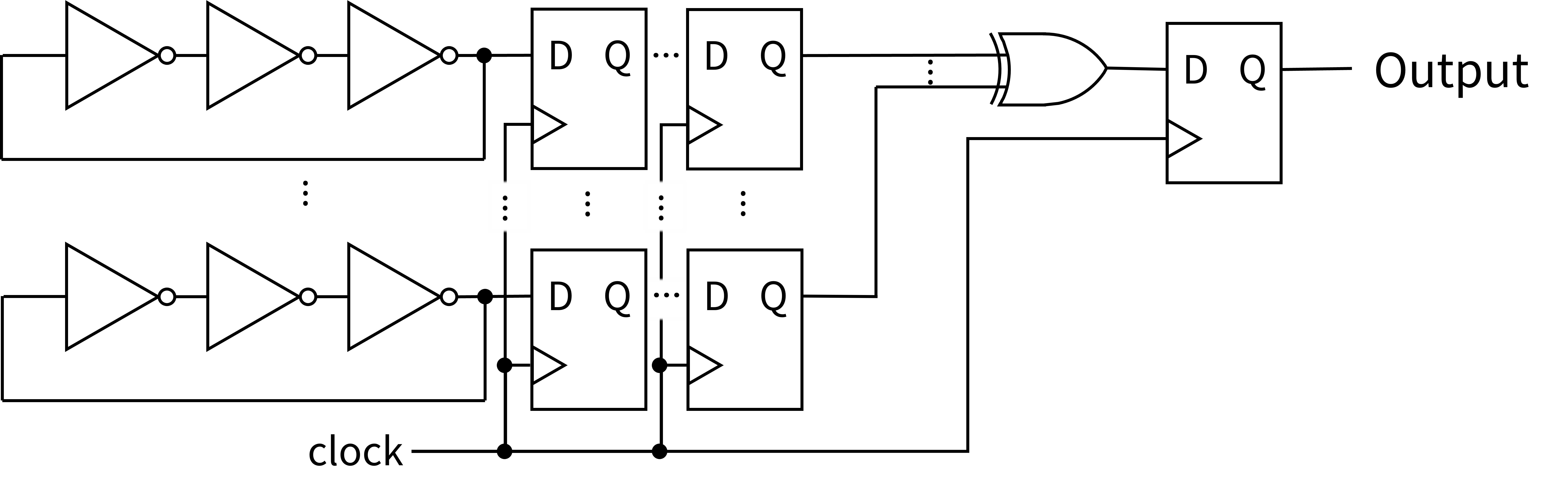 Fig.1-1 Ring oscillator-based true random number generator using multiple-D-FFs
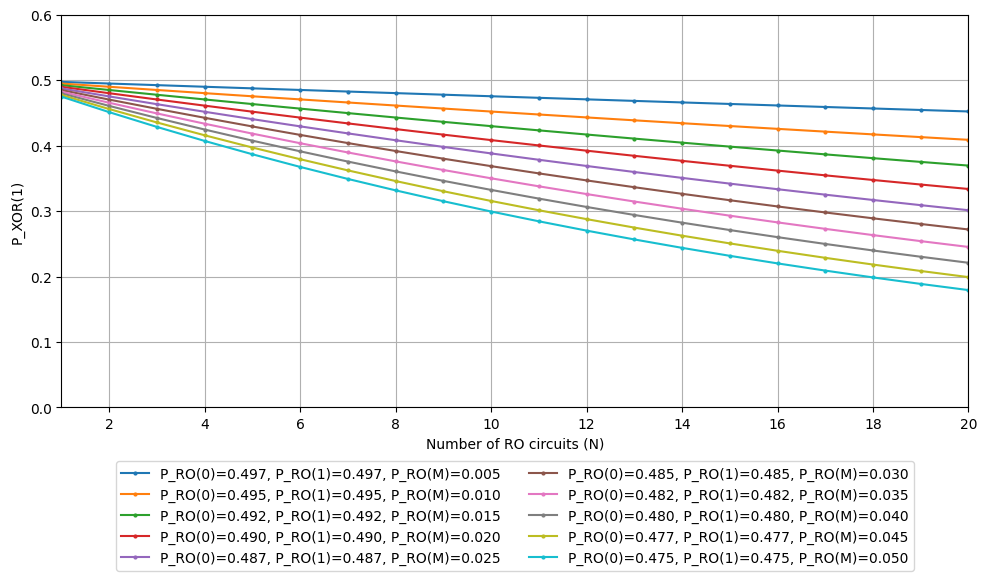 Fig.1-2 Simulation result of correlation with metastable state appearance probability and bit frequency of the random number sequences
Requirement-driven Security Engineering for Constrained IoT
Custom IoT Security Implementation and Evaluation Based on Company Needs
In this laboratory, we collaborate with companies exploring DX (digital transformation) through IoT devices and sensors, working together to determine “what level of security measures truly are necessary” based on actual measurement data. From standard communication encryption and authentication considerations to prototype implementation and verification, we provide you with academic support.
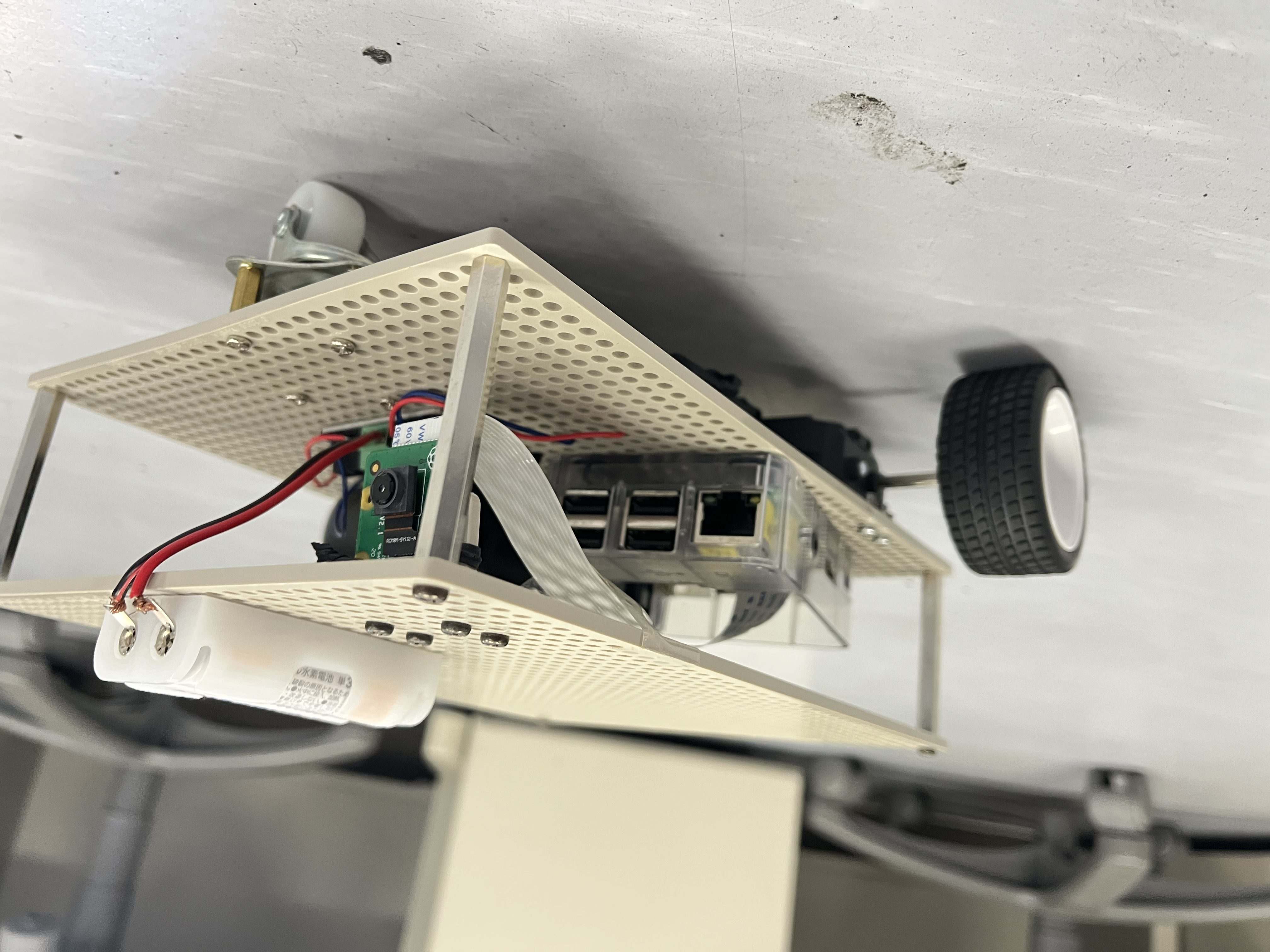 Fig.2-1 The radio-controlled car using a Raspberry Pi web server for the secure remote control system